
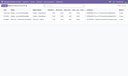


Canadian Trucking Hours of Service, free edition — the two federal regimes of SOR/2005-313 shipped as data with their sections: south and north of latitude 60°N, cycle 1 and cycle 2, daily off-duty deferral and its mandatory declaration, plus the four IFTA unit conversion factors. A satellite of the North American base, never a copy of it.
Overview
Canadian Trucking — free edition
The Canadian satellite of the North American foundation dyo_transport_na_lite. It duplicates nothing: it installs on top, works on the same units, the same drivers and the same trips, and adds only what has no US equivalent.
Also searched as: hours of service Canada Odoo, National Safety Code Standard 9, SOR/2005-313, cycle 1 cycle 2 trucking, daily off-duty time deferral, hours of service Canada Odoo, IFTA litres gallons conversion, North of 60 hours of service.
The Canadian regime is not a translation of the US regime
This is the starting point of this module, and it is what justifies its existence rather than being one more flag in a drop-down list.
Eleven hours of driving on one side, thirteen on the other. Ten consecutive hours off duty on one side, eight on the other — but with ten hours off duty in total over the day, two of them outside the consecutive block, which does not exist in the United States. A fourteen-hour window from coming on duty on one side; sixteen hours elapsed between two eight-hour rest periods on the other — and it is not the same concept, the starting point is not the same. Sixty or seventy hours over seven or eight days on one side; seventy over seven or one hundred and twenty over fourteen on the other, at the driver's choice, and the driver cannot switch cycles without prior off-duty time.
Translating one into the other would produce wrong checks both ways: too strict on driving, too lenient on rest.
Two federal regimes, not one
Canadian federal regulations contain two separate sets of sections depending on latitude. South of the 60th parallel: thirteen hours of driving, fourteen of on-duty time, sixteen hours elapsed, seventy hours per cycle. North of it: fifteen, eighteen, twenty, eighty. Both are included, with their sections, the date they were checked and their caveats.
And an important caveat: the northern regime has no equivalent of the ten-hour daily rest or of the two hours outside the consecutive block. These fields are therefore left at zero, and the corresponding checks do not apply. This is not an oversight in reading the rules: it is what the text says.
Deferral of daily rest, and the only written mention of the trade
A driver may defer up to two hours of daily off-duty time to the following day, under four quantified conditions. The fifth condition is not quantified: the daily log must contain a statement that the driver is deferring, and clearly indicating whether the driver is driving under day one or day two. To our knowledge, this is the only rule in this trade where the text requires a written statement rather than a duration. It is therefore entered explicitly — it is not derived from a calculation, and a deferral without a statement cannot be relied on at inspection, whatever the durations actually taken.
Conversions, using the manual's factor rather than the physics
A Canadian carrier records kilometers and liters; the quarterly return is filed in the system required by the base jurisdiction. The four conversion factors provided are those of the procedures manual: a liter there is 0.2642 gallons, where the exact conversion would give 0.264172. The gap is tiny on a single fill-up and visible over a quarter — and the administration recalculates using the manual's factor. Factors are data, with their source, not constants in the code.
What the free edition does not do
It checks nothing: it records. The six specifically Canadian rules — elapsed time between two rest periods, total daily rest, two hours outside the block, deferral conditions, twenty-four consecutive hours within fourteen days, cycle reset and cycle switching — are assessed by the full edition dyo_transport_ca, which reads them from these same regimes.
What it does not cover, and what must be justified in an audit
Split sleeper-berth rest, ferry crossings of more than five hours, special permits, oil well service vehicles, emergencies and adverse driving conditions. The module knows nothing about these and does not claim to take them into account: it says so on each regime's record rather than letting you believe otherwise.
The Canadian trip inspection is not included
And this is deliberate. In Canada, pre-trip and post-trip inspection falls under Standard 13 of the National Safety Code, adopted province by province. The text of this standard could not be obtained as of 09/14/2026 — the details of what was searched are in the full edition's VERIFICATION.md. Shipping a guessed list of inspection items would be exactly the mistake this catalog forbids itself: a plausible value reads as an answer, and nobody checks it again. The US regime's items remain available, and the province is entered manually.
Free means free
No time limit, no caps, no advertising banner in the work screens. This is not a trial.
Specifications
| Price | Free |
|---|---|
| License | LGPL-3 |
| Odoo series | 19.0: published on the Odoo Apps Store; 20.0: published on the Odoo Apps Store |
| Version | 1.0.0 |
| Edition | Odoo Community / on-premise |
| Technical name | dyo_transport_ca_lite |
| Domain | Human resources, payroll and fleet |
| Premium version | dyo_transport_ca |
Price excluding VAT as displayed on the Odoo Apps Store; purchase and installation are done on the Store or through your Omnifloo instance.